Field, mobility & space research
Supporting design proposalTHERMAL SERVICE LAYER
Heat routing & service study
The proposed thermal layer connecting suit comfort, electronics and service infrastructure.
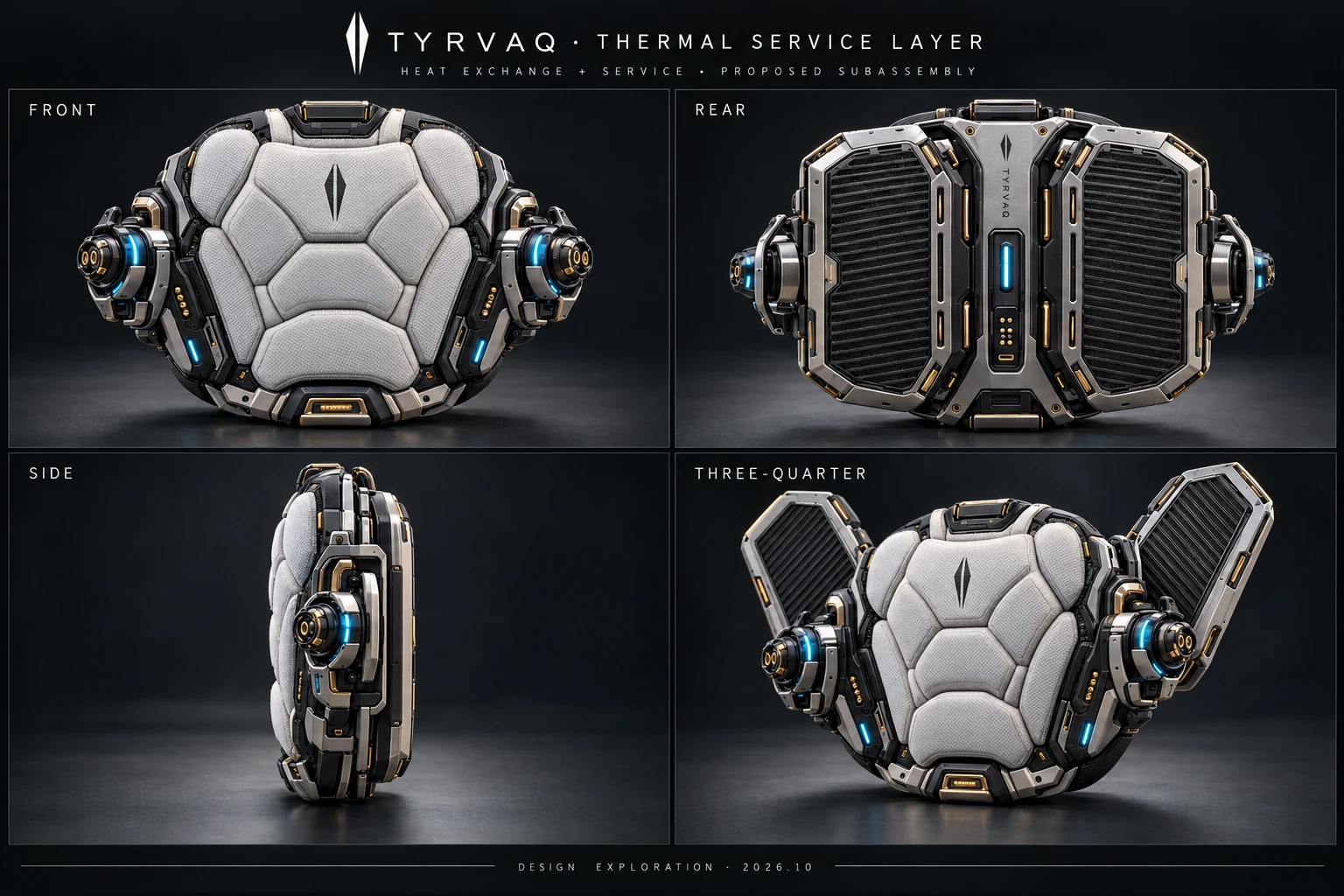
FIELD DOSSIER / TQ-33
Thermal / suit service layer
- Target mass
- 1.0–2.0 kg dry layer
- Target size
- Wearer-fitted garment
- Fit / configuration
- Proposed sizes XS–XXL
Exploratory textile routing and sensors only; coolant, pump and heat rejection hardware excluded.
No cooling-capacity or duration claim follows from this packaging target.
CURRENT STUDIES & ORIGINAL REFERENCES
Every angle. Every detail.
Separate temperature envelopes
Skin contact, garment comfort, electronics, batteries and fluid interfaces need separate thermal limits. Cooling must account for heat rejection and energy input, not only a favorable temperature reading.
Reserve the retreat path
The later service study considers cooling alongside breathing supply, CO2 removal, electrical energy and relative motion. No heat-removal capacity or duration is established by the visual study.
FROM COMPONENT TO CONFIGURATION
See THERMAL SERVICE LAYER in context.
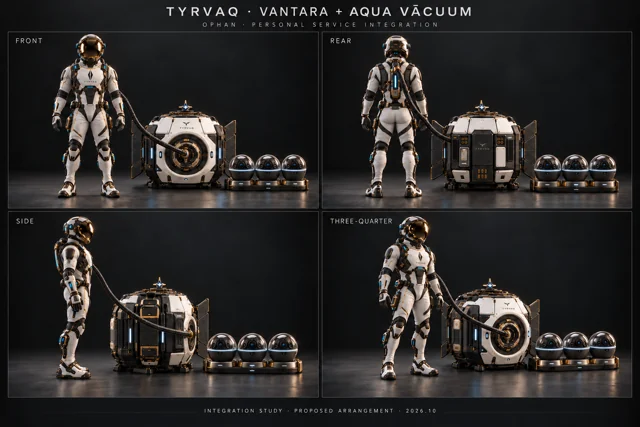
Connected roles
View architecture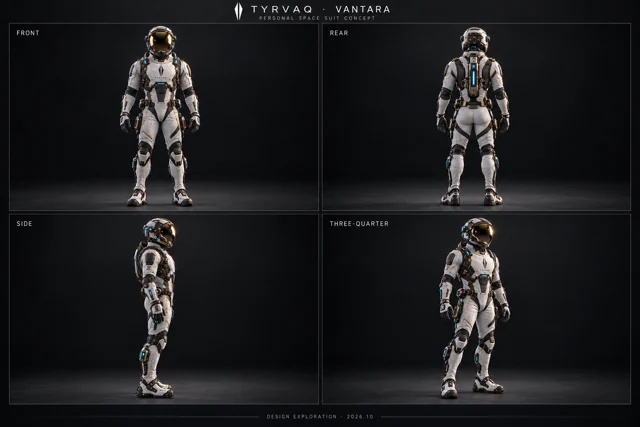 FOUR ANGLES
VANTARA
The personal suit ASSET in TYRVAQ's long-term person-centered space direction.
 FOUR ANGLES
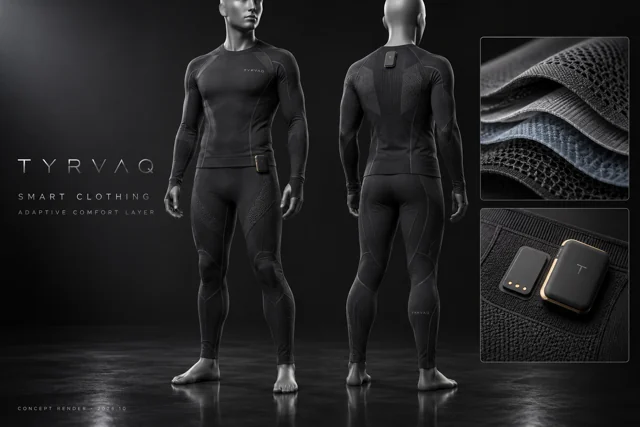
SMART CLOTHING
Garments that combine a comfortable textile layer with sensing, moisture routing and measured thermal behavior.
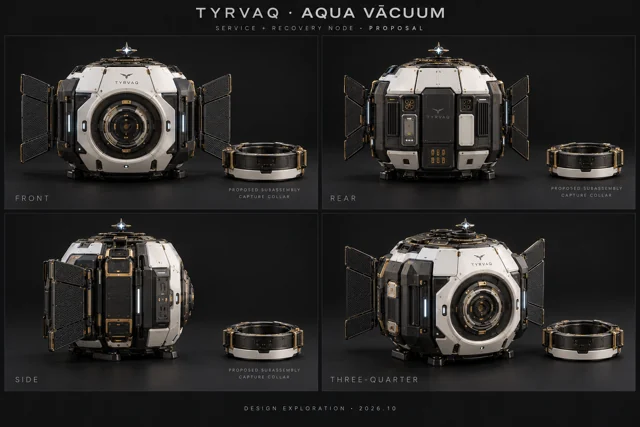 FOUR ANGLES
TYRVAQ AQUA VĀCUUM
The proposed service and recovery node for compatible future personal space ASSETs.
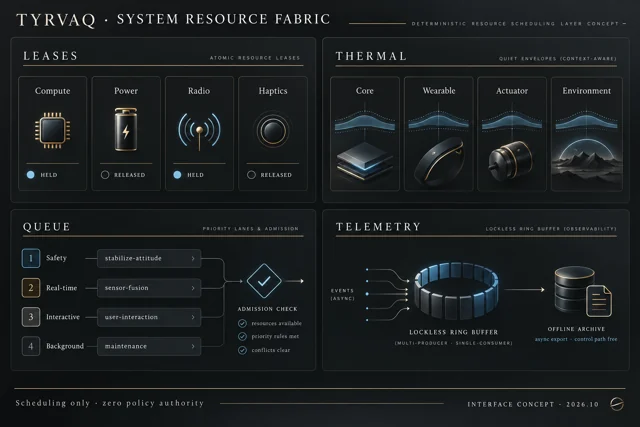 SYSTEM CONCEPT
SYSTEM RESOURCE FABRIC
A scheduler that checks authorized actions against timing, energy, storage and distinct thermal envelopes.